Cliffs of Blood

We crossed flat country now, then began the arduous climb to the Nyi La, our highest pass at 4000m and the gateway to the Kingdom of Lo. As they reached the top, first Netra, then Jit called out “Lha gyal lo!”, meaning: Victory to the gods!

IMG_0335

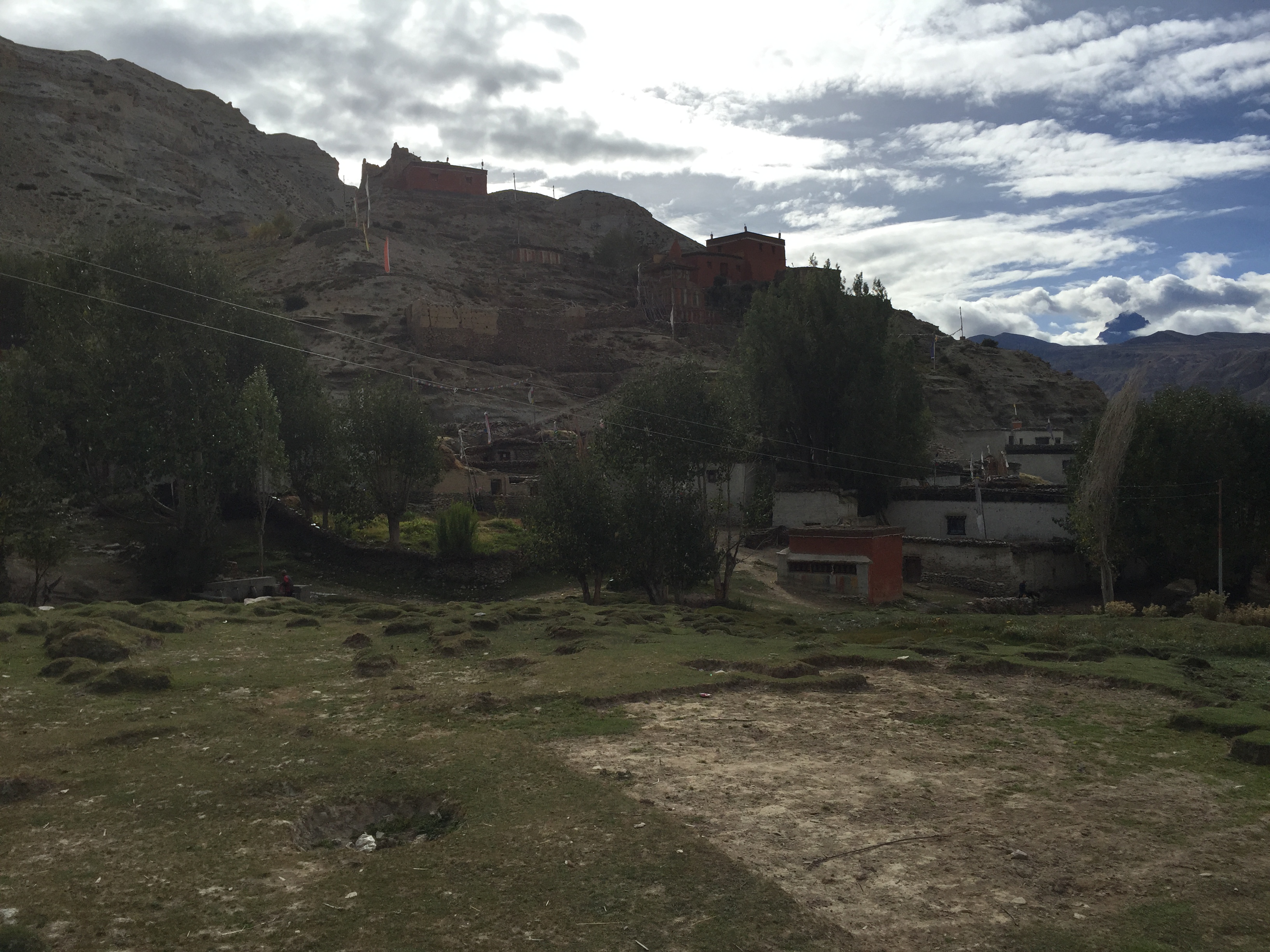
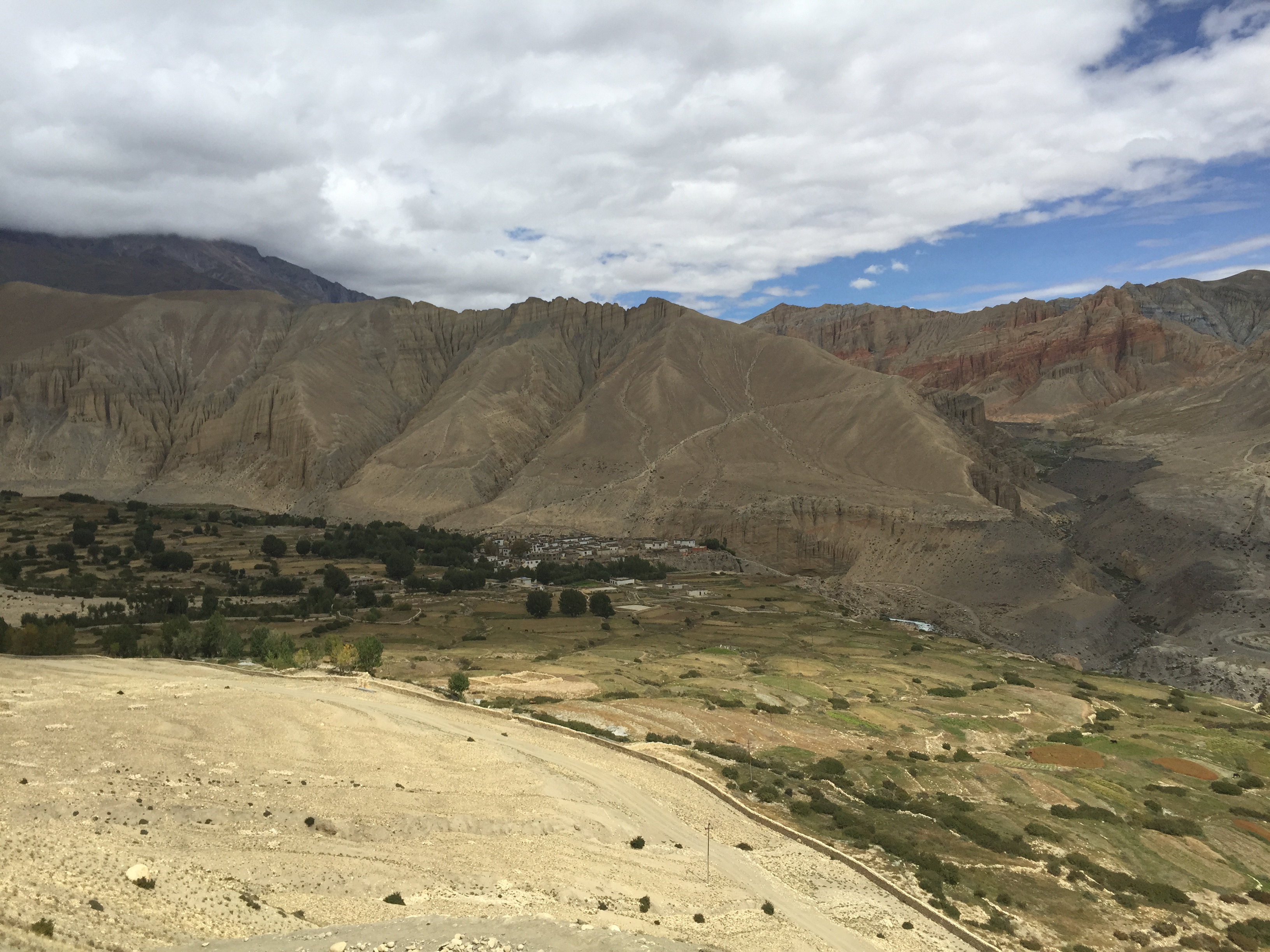
From the top of the pass we looked down on the green and yellow fields of Ghami. Across the gorge was a large modern building surrounded by a wall. Boards covered the entrance and most of the ground floor and there was no sign of life. This is a hospital, built by a Japanese man in the early ’90s. It has apparently been in and out of service over the years.
IMG_0340

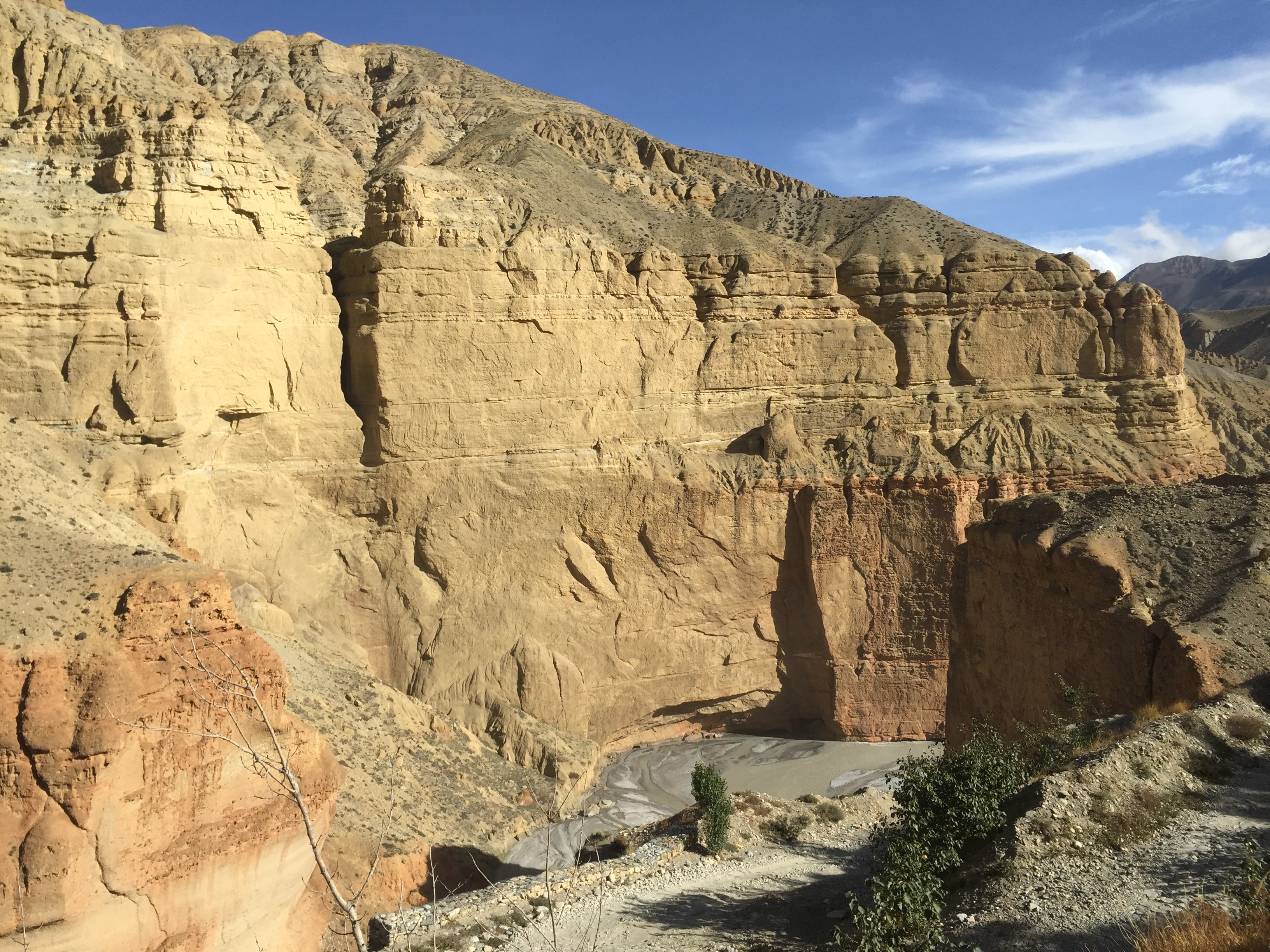
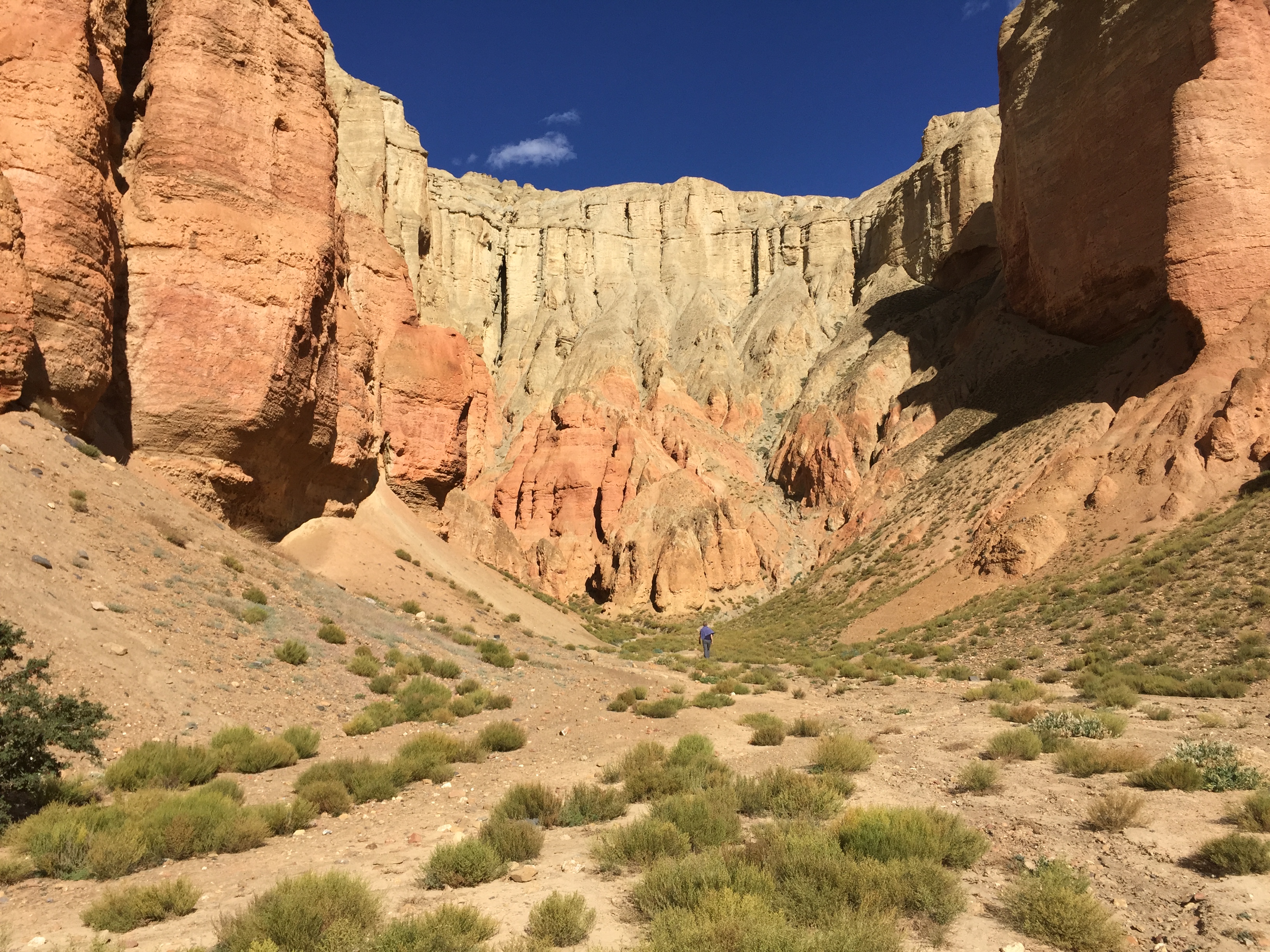
Next to the hospital was the longest mane wall (or prayer wall) in Mustang. Across the gorge to the west, red-stained hills were visible at the end of the next valley. The story goes that a powerful demoness was defeated by a Guru Rinpoche and her blood stains the cliffs, while the mane wall was erected on the place where her intestines were thrown. Her heart was cut into 108 pieces and buried beneath the chortens that surround the monastery of Lo Gekar.

We descended and entered Ghami, where we had lunch at the Royal Hotel. We entered the cool, plant-filled courtyard where a boy was sitting on the ground next to a mound of apples, cutting them up. Our hostess thanked us when we agreed to try both her freshly squeezed apple juice and her apple pie, saying she had so many apples she didn’t know what to do with them.
IMG_0355

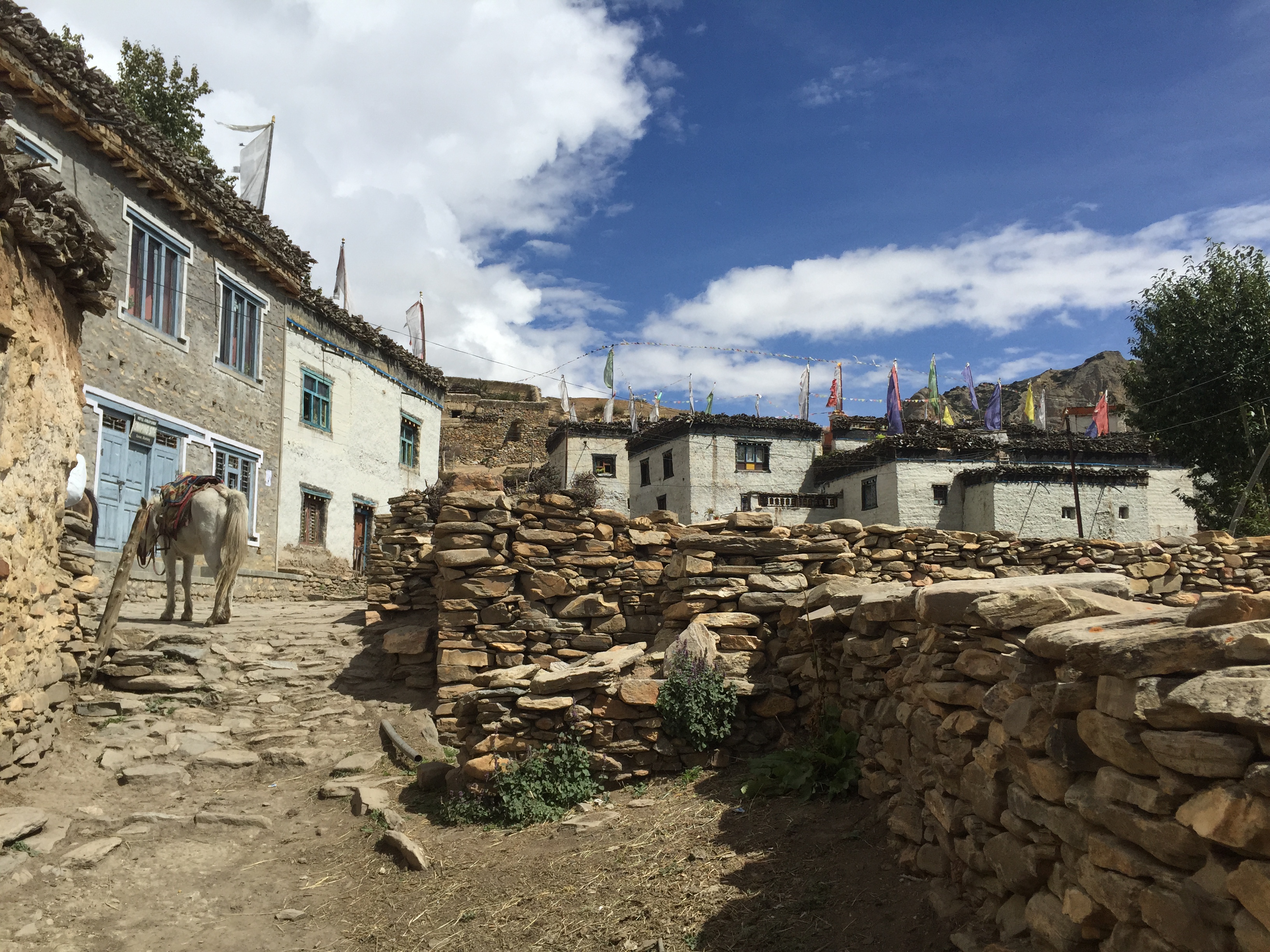
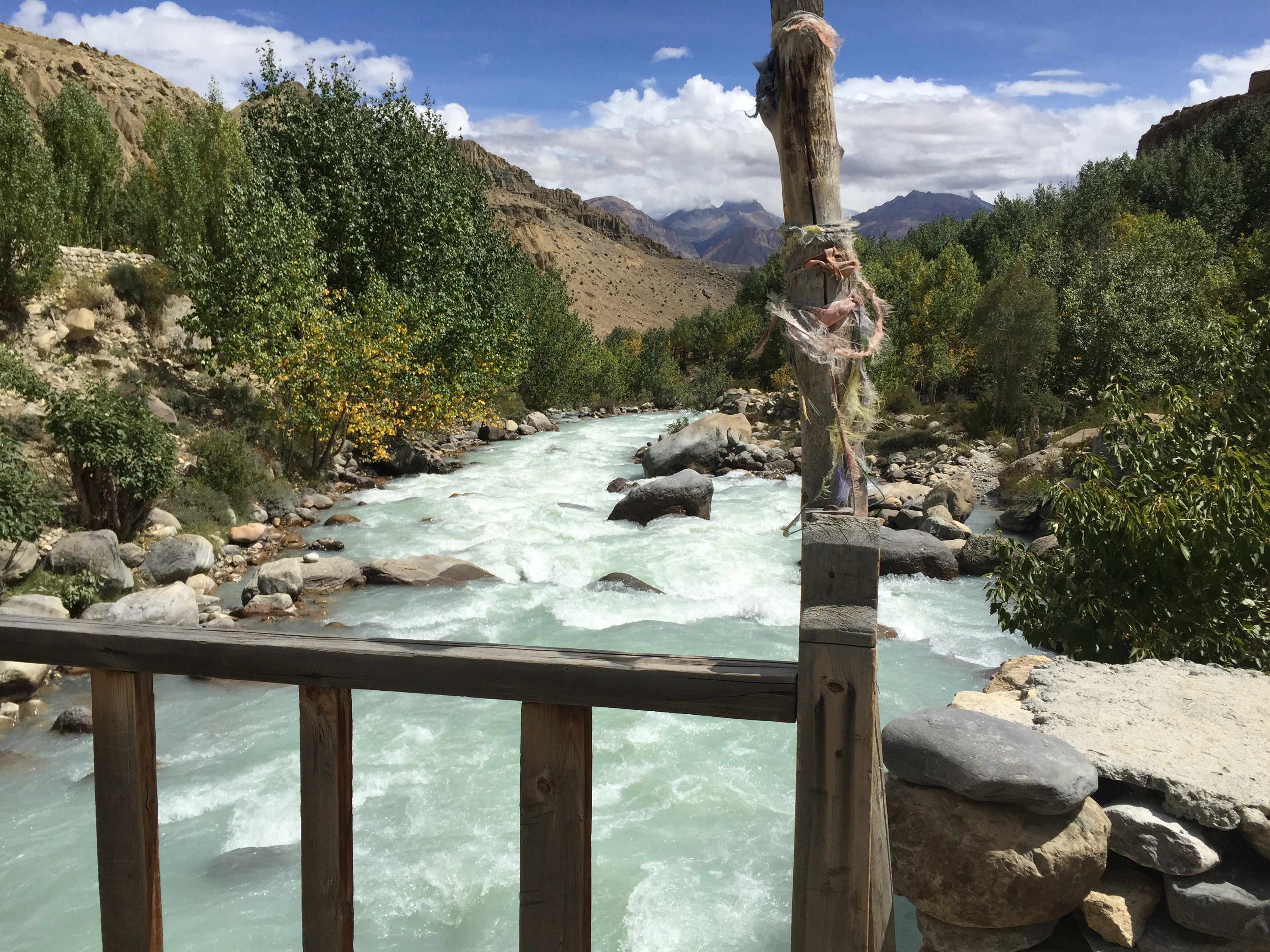
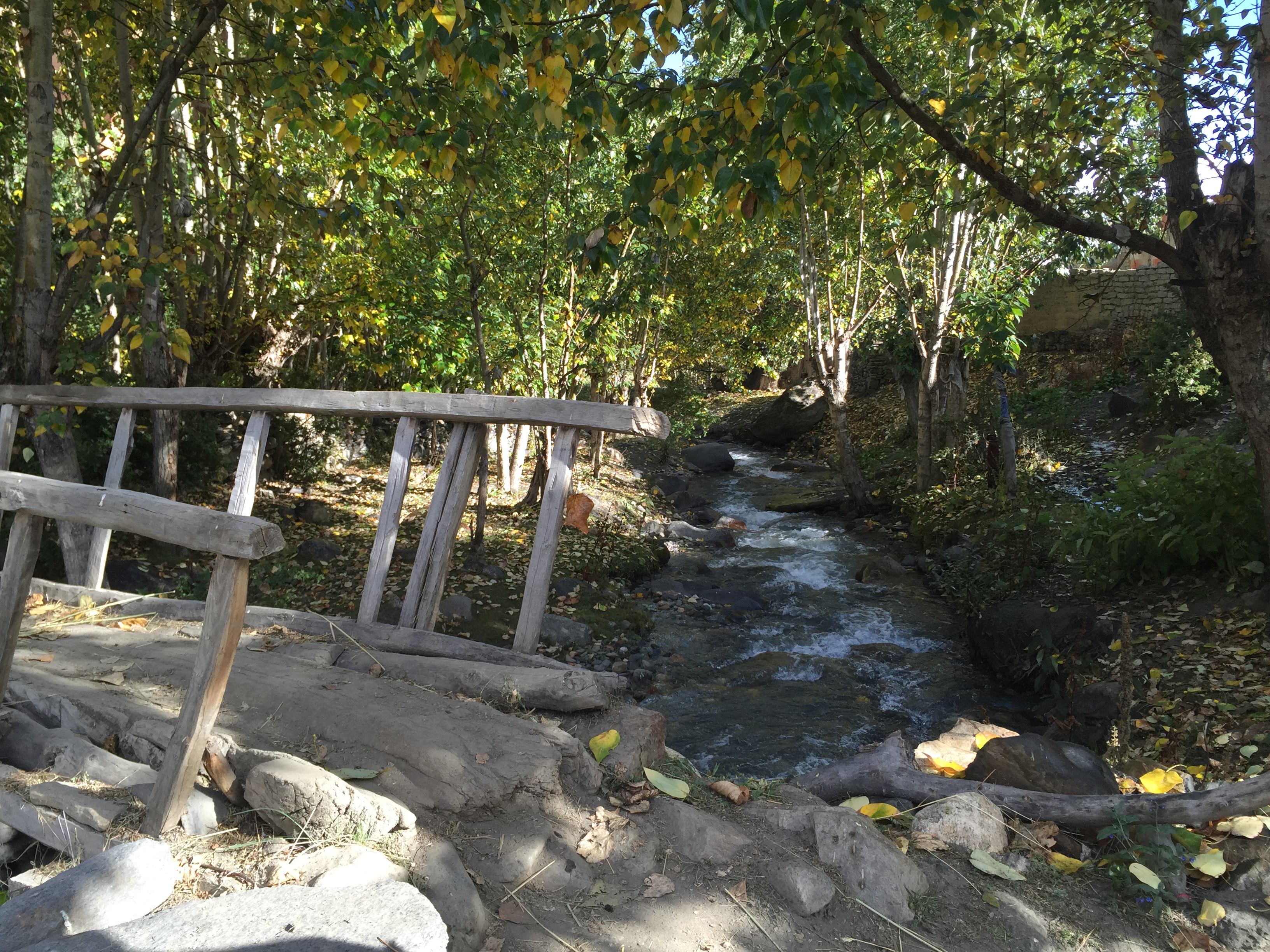
From Ghami, we crossed a wooden bridge strung with prayer flags under which rushed a milky-blue stream and by early afternoon reached Tragmar at the foot of the red-stained cliffs. It was like something out of a fairy-tale. A small stream ran through it, bordered by stone walls and poplar trees, and criss-crossed by rough wooden bridges. Sheaves of pink buckwheat stood in bundles in the fields, and great stacks of hay lay in walled yards. Over in one field a group of young people sat chatting in a circle, and next to a white-washed house two small children played with a sheet of zinc and a long stick.
IMG_0380

Above all this towered the great red cliffs, dotted with caves, ominous and forbidding.
IMG_0366

We stayed at the Tenzin Hotel and Guest House, the only one open in Tragmar.

Next morning I woke early and sat in my warm bed and watched out the window. Next to the stream people squatted in turns by a hose, cleaning their teeth, washing dishes, one in a “Free Tibet” beanie. A man came along with several horses which stopped to drink from the water that pooled there.  I heard the jingle of horse bells and two men and a woman with a baby strapped to her back galloped past.

After breakfast, Jit called to us to come outside and pointed to where, just below the cliffs, rare blue sheep, or gharals, were grazing on the slopes. They were almost invisible until they moved. They are prey for snow leopards that stalk these valleys. Just a couple of weeks before we passed through 120 sheep were killed in the nearby village of Marong.

We now set out for Lo Manthang.

Ghiling

IMG_0201

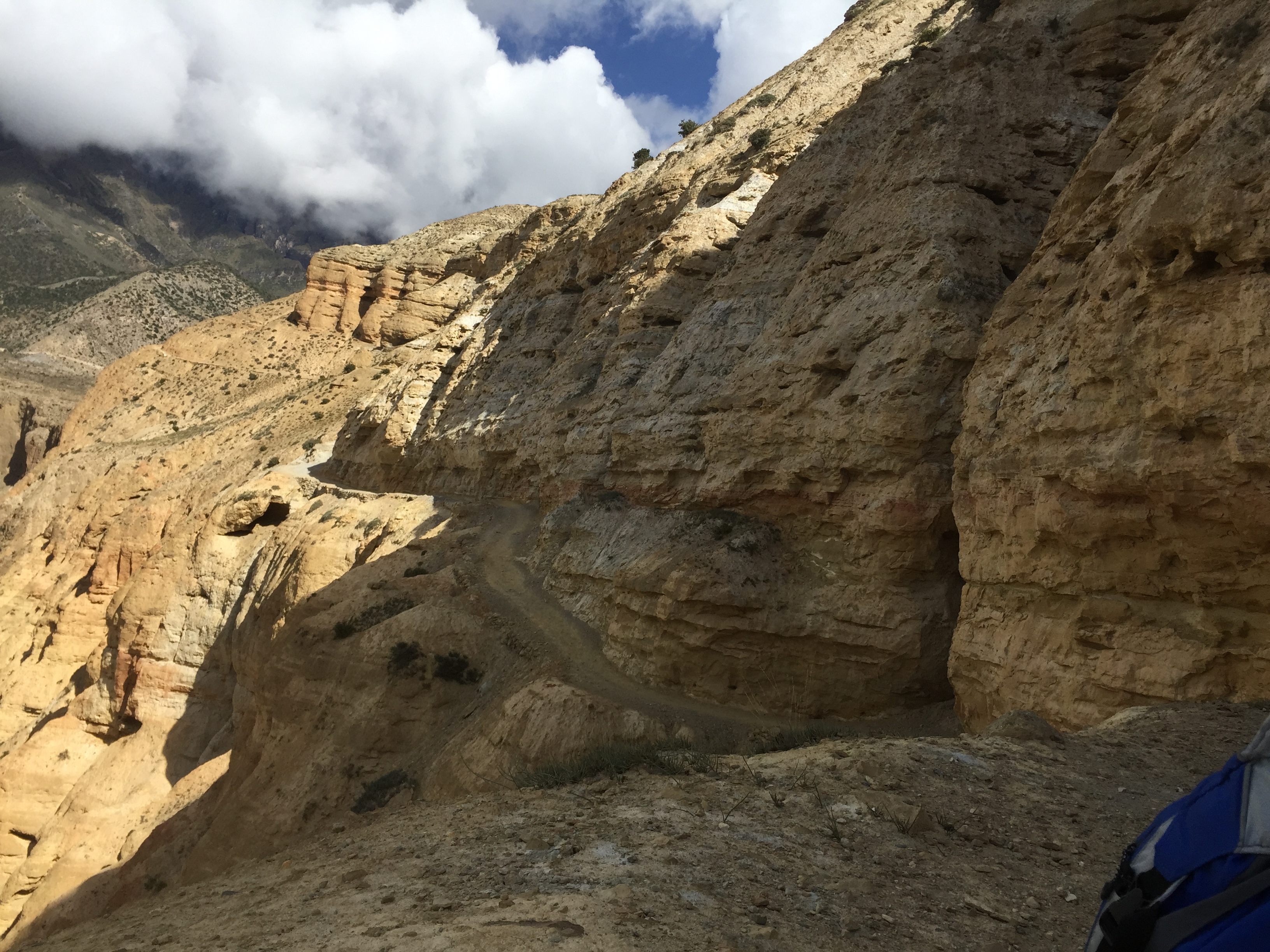
The road now climbed above Tsele heading north-west away from the excoriating wind. Neville, Jit and I set off together leaving Netra and Dabendra to finish getting the horses ready. We didn’t walk far before Nev and Jit turned off the road taking a walking track too steep and narrow for the horses. I sat and waited for the horses but was only able to ride a short distance before once more dismounting. We now joined Neville and Jit again as the track climbed very steeply clinging to the edge of the cliff face, overhung with rock in places. It was extremely hard going. It seemed like we would be climbing forever and I kept hoping that around the next bend the path would level out, but we kept climbing.

IMG_0226
The same track on which Peissel led his yaks

As we ascended we saw the mountains to the south rising with us. To the west, steep hills rose above us, dotted with spiky, stunted bushes. Settling on top were dark, heavy clouds that in the end brought only a brief shower.

IMG_0242

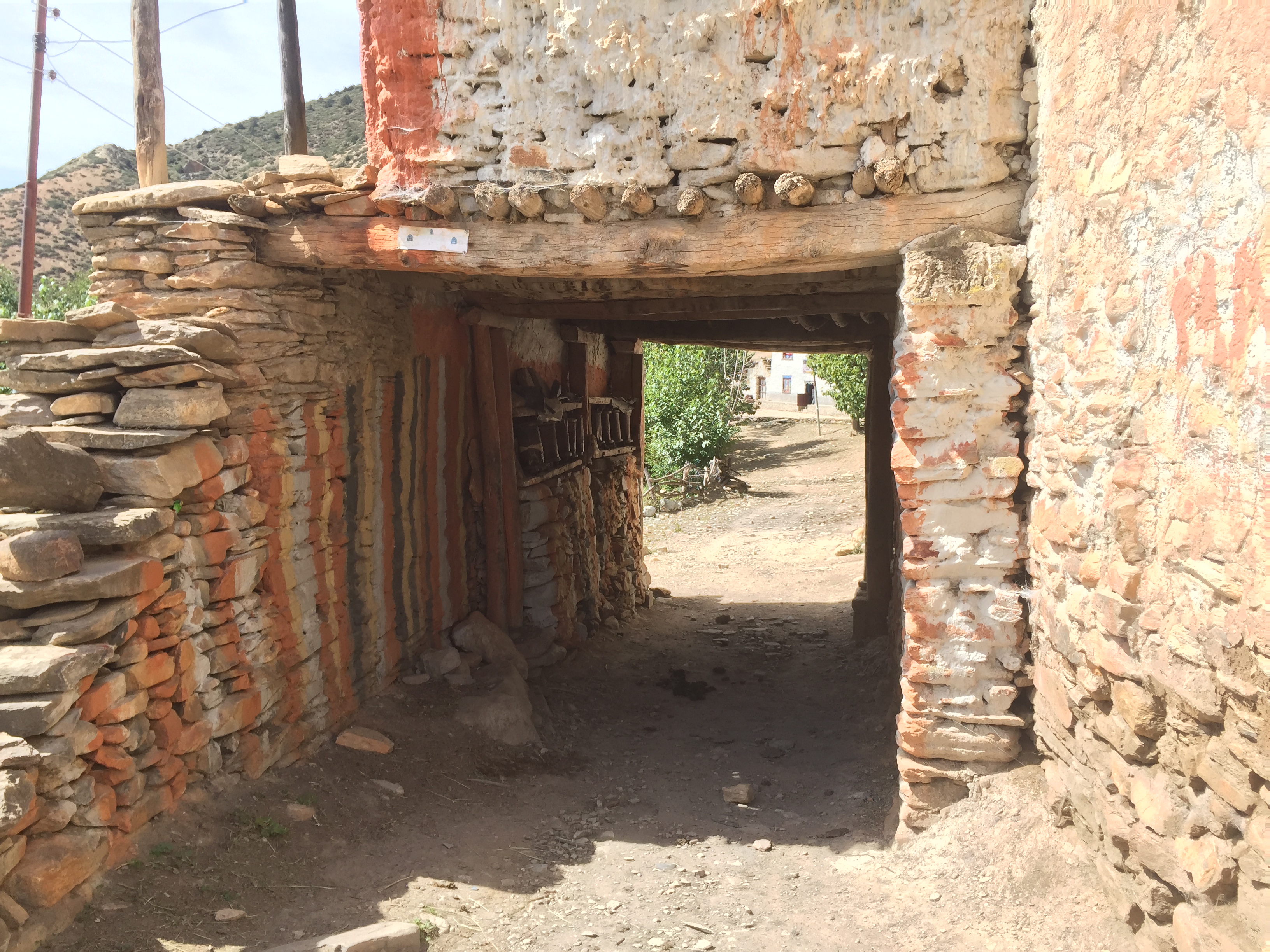
After a couple of hours we made a welcome stop at Samar–which name means “red earth”–crossing a small stream surrounded by a grove of trees, following the stony path through a low entry passage to the Annapurna Guest House.

IMG_0245

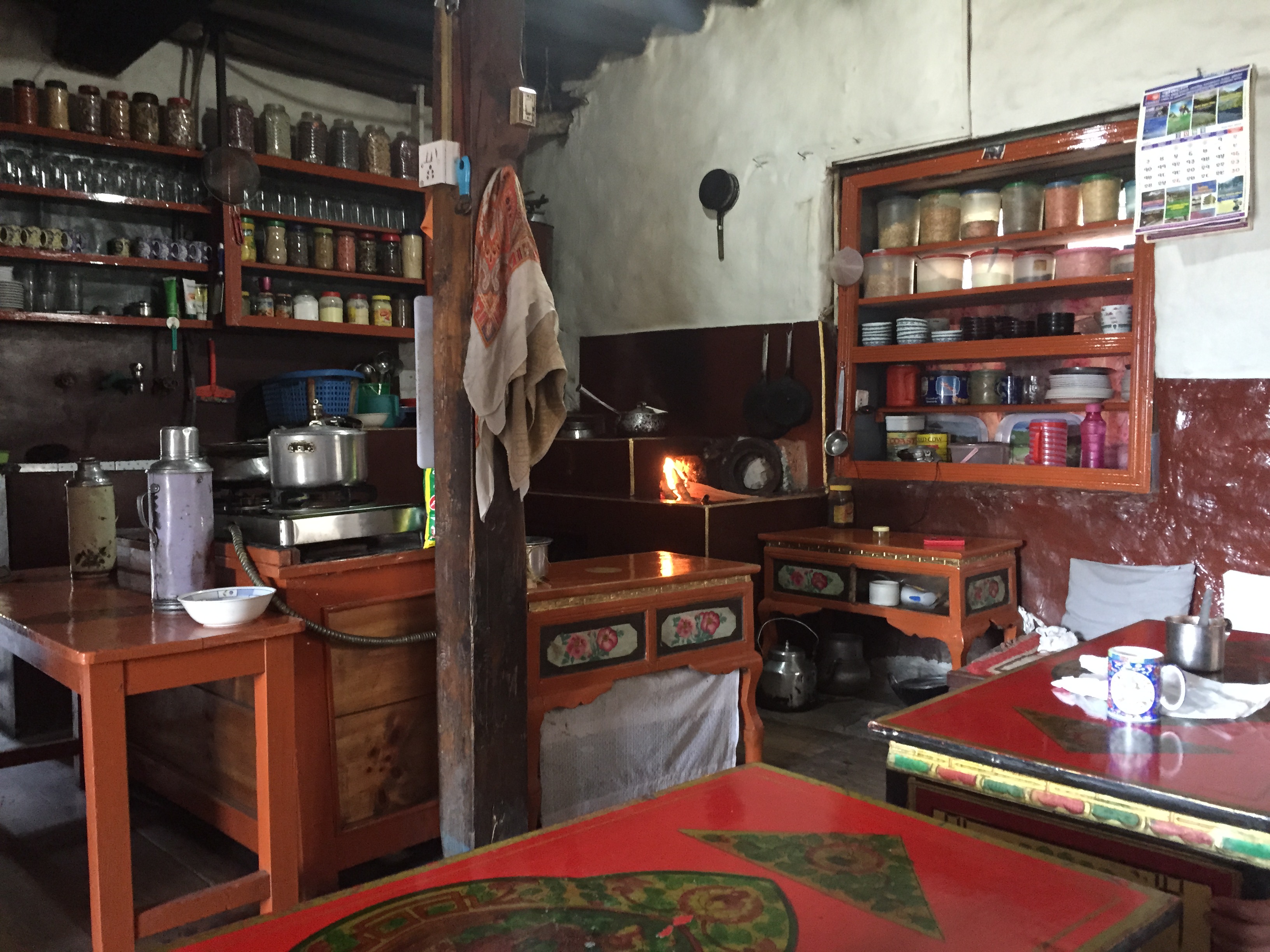
Here we sat in the kitchen where a wood fire burned in one stove and our host, a woman in traditional Tibetan dress, made us sweet milk tea on a gas cooker, ladling the tea continuously to dissolve the powdered milk.

IMG_0234

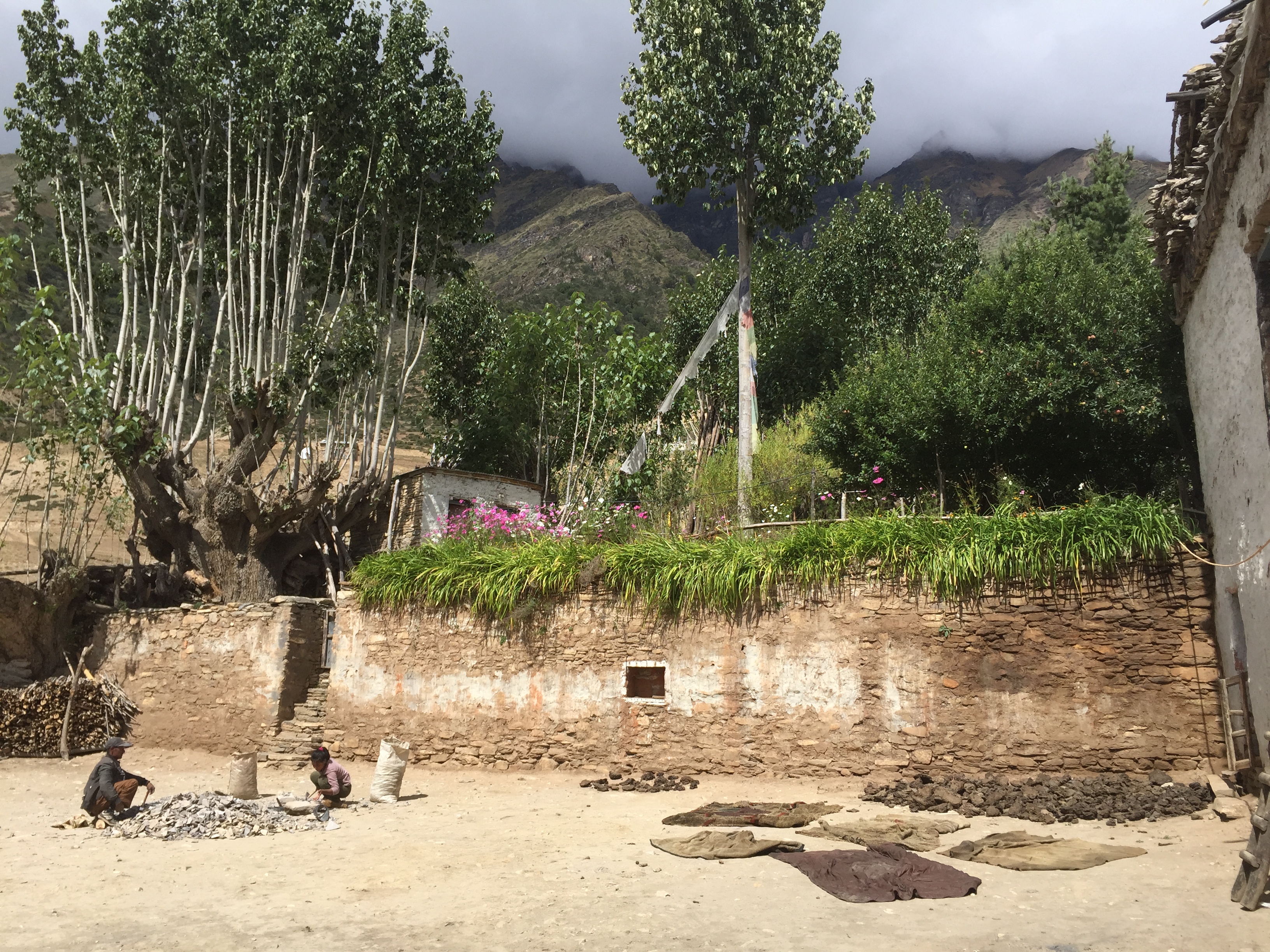
In a walled yard outside a man and a young girl sat breaking rocks, which they then put into canvas feed bags. In one corner of the yard dung was spread on the ground to dry for use later as fuel.

IMG_0238

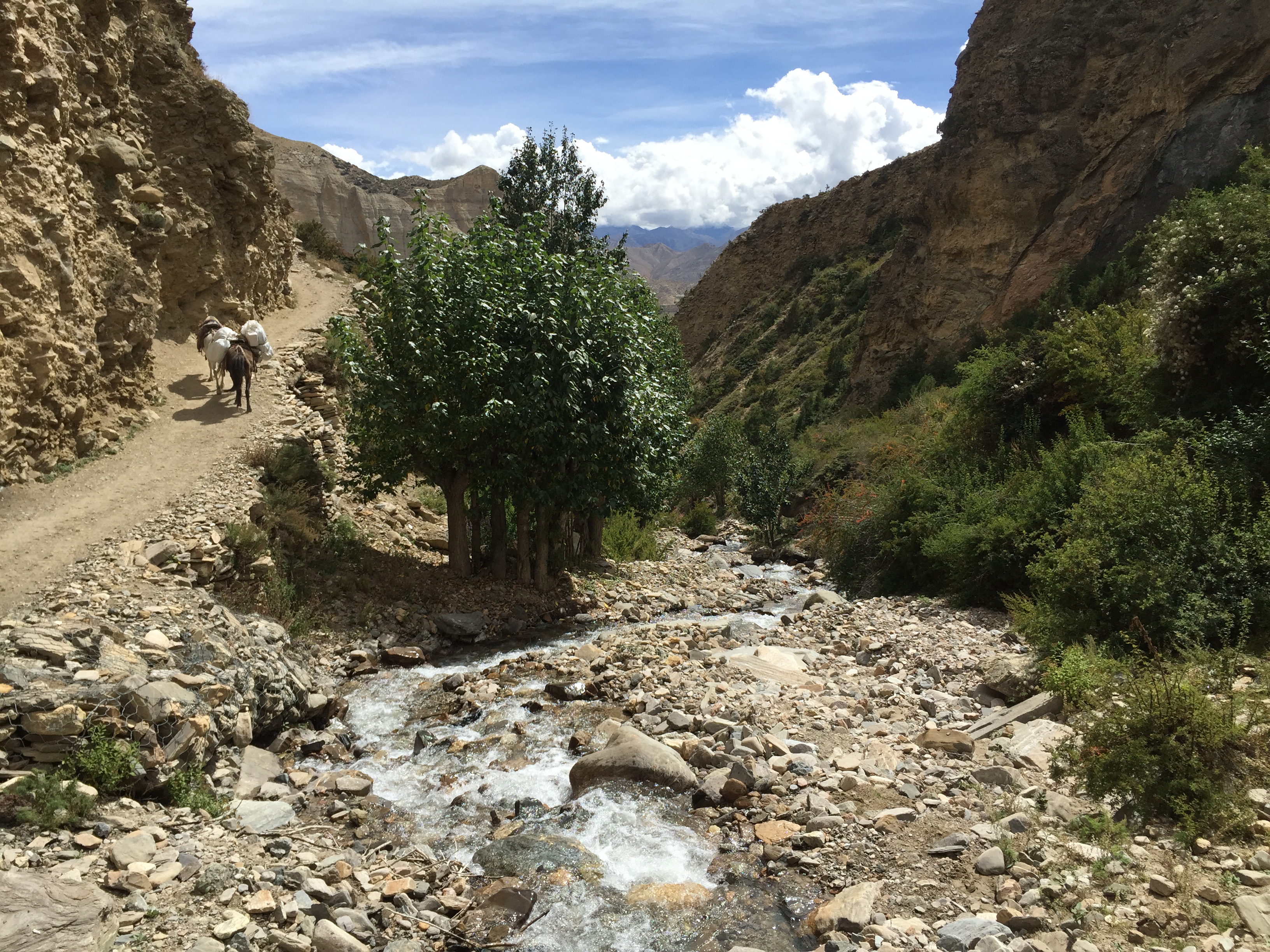
From Samar the path led out through another gateway, down and across a bubbling, milky-blue stream, before once again climbing along the side of a cliff.

IMG_0249

We stopped for lunch at the tiny village of Bhena. The tea house was just three rooms: a kitchen, dining room (which was also the entry) and a bedroom with a storage loft above. A small baby lay softly mewling in the bedroom and suspended above him was a plastic beachball, the only thing resembling a toy that I saw in Mustang. His older sister, who was about five, slowly inched towards us as we sat waiting for our lunch. I took out my phone and showed her how to take a “selfie” with which she was very pleased. After a few more photos that game was exhausted so I took out my small notebook and a pencil and agave it to her to draw in. Instead, she began to write ABDEF, over and over, always leaving out the C. So I wrote it correctly for her and she copied it a few times. I then handed her the pencil, indicating that she could keep it and she skipped away to show everyone.

IMG_0292.JPG

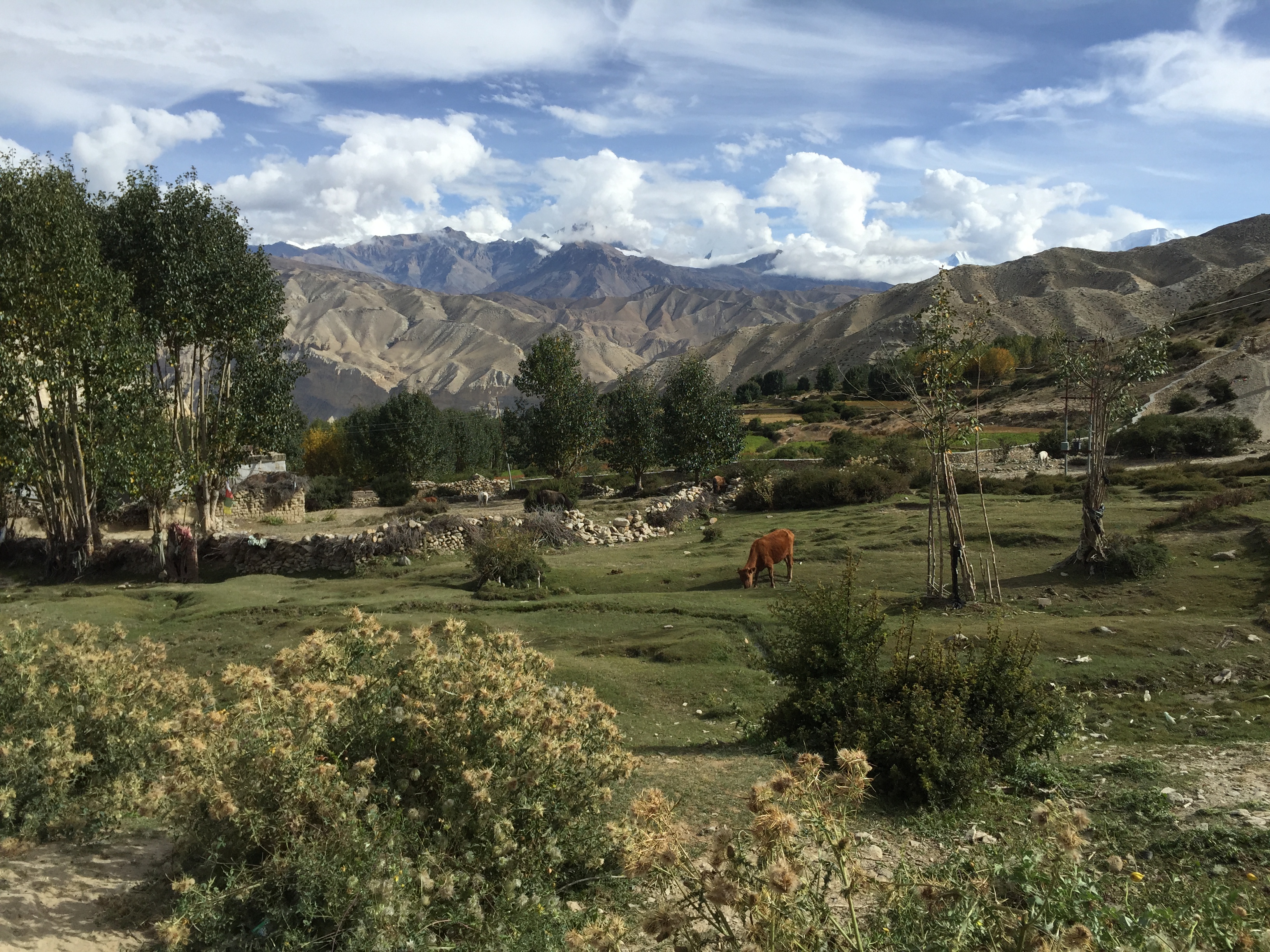
After crossing the pass above Bhena, at 3800m, we descended to the impossibly green and beautiful village of Ghiling. As we approached, a man and woman called out and a loud discussion ensued; it was obvious we weren’t expected. Nev and I sat and waited while this was sorted out, but I had resigned myself to camping that night before Netra said “please come” and crossing a walled yard, where the garden was edged with empty Tuborg beer bottles, we entered the tea house via a passageway that led to an interior courtyard covered with a green translucent roof that bathed everything in a weird green light.

IMG_0328

Next morning, Jit took us to the monastery that perches above the village. Back in 1992, when Mustang was first opened up to tourists, thangkas (religious paintings) and statues were stolen from the monastery. Now someone sleeps on a bed inside the entrance to guard it. A square skylight let some light into the dimly lit assembly hall where I lit a butter lamp and the monk dipped a brush into a plastic container of water and flicked it over the lamps, intoning prayers. Outside we climbed onto the roof and Jit pointed to a smaller monastery above, but said it was forbidden for women to enter, and anyway it was locked.

As we looked down on the patchwork fields of Ghiling, Jit pointed to a faint track leading away to the west between low, barren hills; this would lead us to our next destination: Tragmar.

Only later did I learn that Ghiling had lost more than 60 houses in the earthquake.


Tsele

It was at Tsele that we left the modern world behind.

Now there was no internet, limited phone coverage and patchy electricity. After lunching in Chhusang, we followed the river again before it narrowed dramatically running through a rock tunnel, formed long ago by an enormous piece of the cliff falling against the other side. In the cliff face high above was a uniform row of caves, some of the many thousands that dot the cliffs throughout Mustang, and about which little is known.

IMG_0181When Michel Peissel reached this point he encountered only a simple bridge of planks of wood bolted together, impossible for his yaks to cross. There is now a steel bridge, which we walked across, but the horses had to wade across the shallow river, just as the jeeps do when the water is low enough. A road bridge is now being built and will provide vehicle access all year round.
Peissel took his yaks up the very steep and narrow gorge of the Ghyakar Khola that runs beside Tsele:

The sides of the canyon were so steep and so close together that in many parts the sunlight could not reach us, and we advanced as if in a cave, from whose bottom we could only occasionally glimpse a bit of blue sky.

IMG_0209

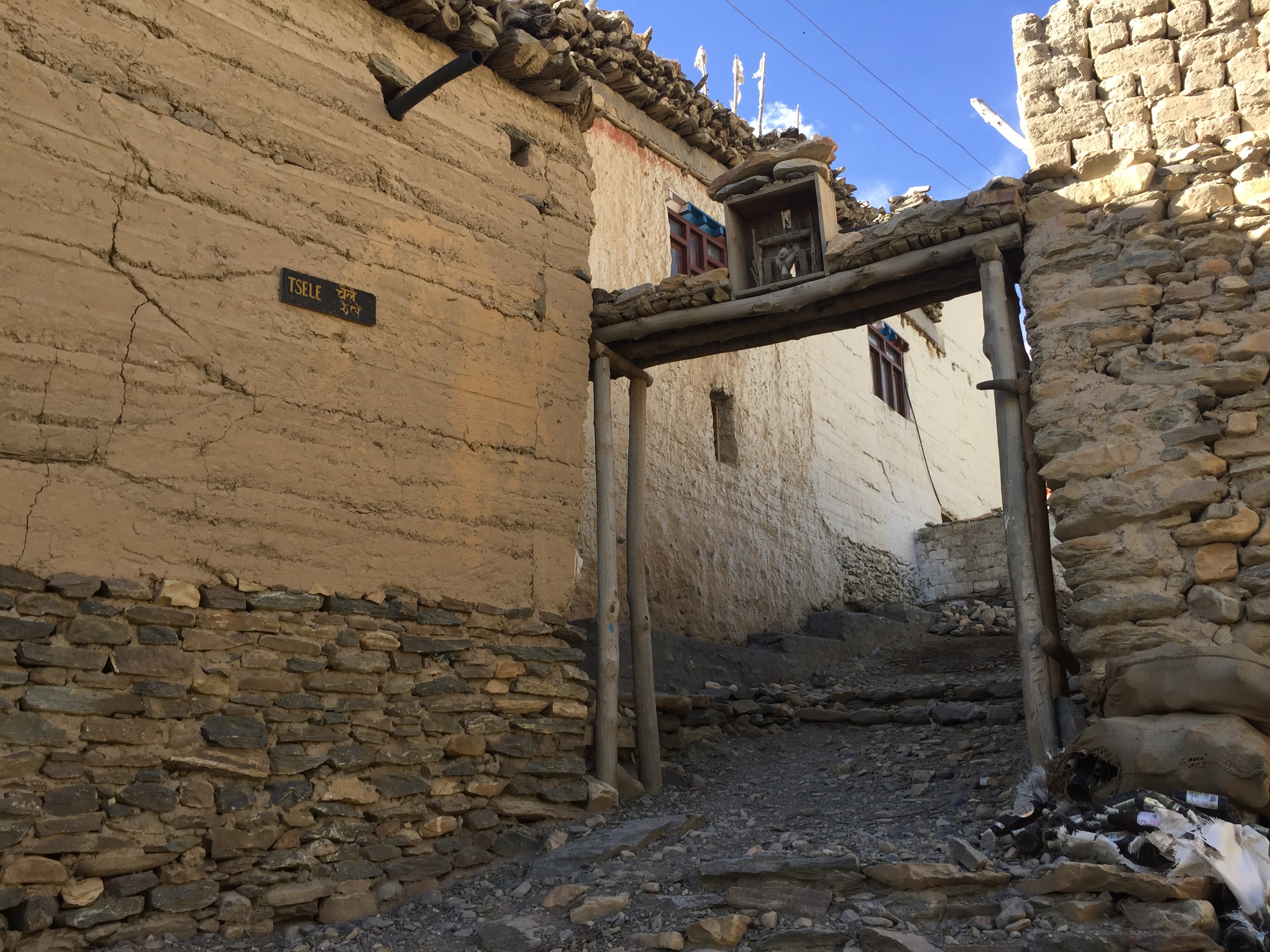
He bypassed Tsele, but we took the almost vertical track beside the khola up to the village, entering via a wooden gateway, following the path as it continued up and between white-washed walls before arriving at our lodge for the night.

IMG_0193

After tea on the terrace that looked out at the dramatic cliffs of the Kali Gandaki canyon, the table cloth nailed to the table so the fierce wind couldn’t whip it away, we explored the small village. It seemed quite deserted. One old man sat alone on a step spinning a prayer wheel and bid us a weary ‘namaste’ as we passed, women were out in the field gathering the harvest together before covering it with what looked like an old tent, and late in the afternoon a noisy game of volleyball was being played in a small courtyard below us, triumphant, joyful cries rising into the dimming light as dusk came on. Our lodge appeared to be the only one open.

IMG_0192

Here the altitude began to bite. We were at 3070m and I had a headache and had begun to feel vaguely unwell, but after I’d eaten some dinner I felt better. I also had some difficulty with the squat toilet. It was not so much the nature of the toilet as its location. It was outside in a separate building reached through a passageway between rooms. At the end of the passageway was a door and it had to be bolted shut to stop it banging in the relentless wind. The problem was that the bolt was on the inside. Inevitably, I had to use the toilet during the night which meant  I had to leave it unbolted and be quick enough to get back inside before someone got annoyed enough by the banging to get up and bolt it. I wasn’t, and when I emerged from the toilet block with only my head torch for light I found  I was locked out. I thought maybe the window next to the door was our room and tapped on it, calling Neville’s name softly, but wasn’t sure enough that it was our room to persist, which was lucky because it wasn’t. There was no other option but to bang on the door until someone opened it. Eventually a rather frightened Nepalese man opened it saying:

“It was open.”

“Wasn’t it bolted?” I replied.

“I didn’t know,” he said.

The conversation made no sense, and I must have looked and sounded angrier than I was.

That night, the Nepalese were glued to the television as their government finally handed down the first constitution. They didn’t know then that it would lead to deadly clashes on the border with India and a four month long blockade creating crippling fuel shortages, bringing the country to a standstill.

I awoke to the sound of the horses’ bells as Dabendra brought them up outside our window and got them ready for the next day’s travel. We would be climbing higher to the village Ghiling.